Incident Response : Phases & understanding them better
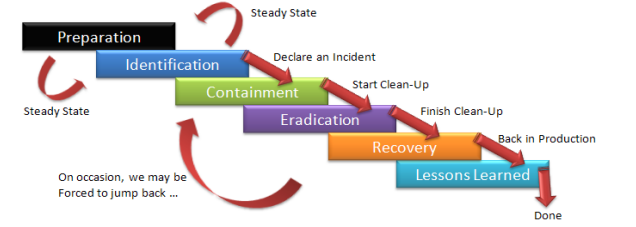
Incident response is a complex process and needs handling in well defined phases.

The objective is to have a set of standard and common containment and mitigation tasks that gets applied during a response. While handling an adversary it helps to know what all steps we can possibly do and then accordingly take action based on which part of the kill chain the adversary is in. Reasoning – The adversary keeps changing their tactics and techniques. They have […]
You need to quickly contain the problem considering which part of kill chain your adversary is in. You to need contain and neutralize the impact of the incident by possibly shutting down specific services/servers/segments.
Multiple payment authorization attempts used to verify the validity of bulk stolen payment card data.
False clicks and fraudulent display of web-placed advertisements Description Lists of full credit and/or debit card data are tested against a merchant’s payment processes to identify valid card details. The quality of stolen data is often unknown, and Carding is used to identify good data of higher value. Payment cardholder data may have been stolen from another application, stolen from a different payment channel, or […]
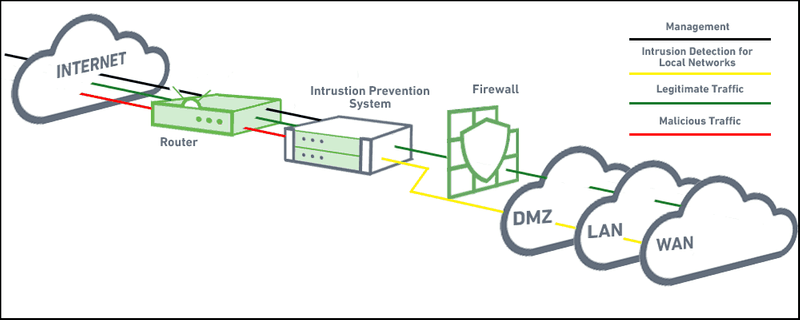
Alerts are generated when something suspicious is seen by one of the Network monitoring devices. Network Security Tools:IDS (Intrusion Detection System)IPS (Intrusion Prevention System)DLP (Data Loss Prevention)SIEM (Security Incident and Event Management)NBAD (Network Behavior Anomaly Detection) Playbook Mitigation https://cert.societegenerale.com/resources/files/IRM-5-Malicious-Network-Behaviour.pdf References
Insider threats are growing and are very complex to handle as it needs to be worked outvery closely with a lot of stakeholders including the human resource department.
Companies need to respond to a data breach in such a way that it’s crystal clear to all related. Lets explore state-of-art remediation practices.
Brute-force and dictionary attacks against remote services such as SSH, are one of the Top-20 most common forms of attack on the Internet that compromise servers. In particular, Unix-based and Mac OS X servers that run an SSH service to allow administrators secure remote connections are at risk. Playbook Mitigation Disable root access – It is a good security practice to disable logins via SSH […]
We will ensure you are prepared for a cyber attack. Response Plans to Playbooks to TableTops - IT & OT - No SPAM.